The Death of Preference

Many years ago, I went to a conference with our church’s youth group. This particular conference while being teen oriented, underwent a transformation from strictly cessationist to open to the move of the spirit. As I recall, it was actually the result of a sudden move of the Holy Spirit which had not happened before at this conference.

This conference was well known among churches in New York, bringing in many well known/famous preachers and guest speakers. I’ll never forget the last time our church went. The preacher was the grandson of another famous Pentecostal preacher. Worship at this conference was always uplifting, with bands that were geared towards the younger crowd, they played mostly modern praise and worship. However after this preacher’s first night message, which condemned anything modern, for the rest of the event, it was hymns only.

This experience stuck to me because it showed how quickly worship can become a battleground for personal preference rather than a pursuit of God. When this happens, worship is no longer about God.

The Algorithm

I’ve been thinking about that conference lately because I’m seeing the same pattern play out online.

One of the worst things that for some reason happens to me is that the social media algorithm pushes a lot of nitpicky content my way. It might have to do with the broad scope of things that I listen to and learn from. Nonetheless, I don’t always enjoy what I see.

One of my favorite podcast hosts has a very particular taste in the way he thinks things should be done. I don’t always agree with him, but in many cases I see so much value in what he has to share. I often feel challenged after hearing what he has to speak on many topics. One of the things that I can quote him on is that “our music should be as lofty as possible.” This was followed up with a video similar to this.

Not too many churches can pull off a full orchestra. Most churches seem to struggle to get more than just a few people with musical talent. So not having an orchestra can’t possibly be a barrier to truly worshipping God, can it?

Here is where I start questioning things though. Some time later (much more recently) he showed another video. I’ll include this actual one here.

Here was the critique on this video from both the podcast host and comments section:

  • They’re not dressed in the way I want them to be.
  • Their muscles are too big so that means they’re using steroids.
  • Auto tune was used.
  • Someone has tattoos.
  • Hairstyles I don’t like.

What bothers me isn’t disagreement, but it’s the the way we tear people down over things that have nothing to do with worship or holiness.

The time for dishonoring one another over what our personal preferences are needs to end. In the body of Christ, we’re supposed to build each other up. That also includes correcting or rebuking, but not mocking.

Regardless of personal preference, we do need to ask the question: what is worship actually supposed to be?

What Should Worship Be?

In the most basic sense, worship is “ascribing worth to God.” There are really 2 things that we need to be able to worship God.

For God is Spirit, so those who worship him must worship in spirit and in truth.

John 4:24

Worshipping God in Spirit means more than just going through the motions. It’s a deep personal sacrifice that involves the deepest depths of your heart and soul. It should be a sacrifice, it should cost us something.

Worshipping God in Truth means we worship him based on the revelation that both Scripture and The Spirit make. We don’t setup an idol or worship a God of our own making. We worship the God who is eternal.

When we worship in Spirit and Truth, personal preference fades and God becomes the focus. This requires something costly: letting God strip away the parts of us that cling to control. After all worship isn’t a stage to critique, it’s an altar to die on. Maybe if we sacrificed our preferences there, we would make room for his presence.

Happy 250th Birthday America

Two hundred and fifty years.
A quarter of a millennium.

On a day like this, I can’t help but think about the men and women who stood at the very beginning of this story. Ordinary people with extraordinary conviction. Farmers, printers, blacksmiths, merchants – people who had every reason to keep their heads down and stay quiet. But instead, they stepped forward into the unknown, signing their names onto a document that might as well have been a death warrant.

They gave their lives, their fortunes, and their sacred honor so that we could inherit something they themselves barely understood: freedom.

But here’s the part that gets to me today: do we even know what that word means anymore?

Janis Joplin once sang, “freedom is just another word for nothing left to lose.” It’s a haunting line, because the founders of our nation did lose almost everything. Homes burned. Families scattered. Lives ended on muddy fields under foreign flags. They fought not because freedom was comfortable, but because it was costly, and worth the cost.

Do we still feel that weight?

When I look around today, I’m not always sure. We talk about freedom like it’s a product on a shelf. We treat it like a personal preference instead of a shared inheritance. We argue about it, meme about it, weaponize it, and sometimes forget that it was never meant to be easy.

Freedom was meant to be stewarded, not consumed. Protected, not presumed. Lived, not merely demanded.

Scripture has a way of cutting through our modern fog. Paul writes in Galatians 5:13, “You, my brothers and sisters, were called to be free. But do not use your freedom to indulge the flesh; rather, serve one another humbly in love.”

Freedom isn’t the absence of responsibility, it’s the presence of purpose.

Jesus Himself said in John 8:32, “Then you will know the truth, and the truth will set you free.” Not comfort. Not convenience. Not self-expression. Truth.

Truth is what the founders staked their lives on. Truth is what carried soldiers through so many battles throughout our history. Truth is what still calls us quietly and insistently to live lives worthy of the price that was paid.

So what do we do with America at 250?

We remember. We repent where we’ve drifted. We recommit to the hard work of being a people who understand that freedom is not a feeling but it’s a responsibility handed down through blood and sacrifice.

We teach our children that liberty is not guaranteed. We honor those who carried it before us, and we ask God to shape us into people who can carry it forward.

Psalm 33:12 says, “Blessed is the nation whose God is the Lord.” That’s not a boast, it’s a plea. A reminder that blessing follows surrender, not swagger.

So today, on America’s 250th birthday, I’m grateful. Grateful for the founders who risked everything. Grateful for the generations who defended what they built. Grateful for the chance in this moment, in this year, in this fragile cultural season to choose again what kind of people we want to be.

May we be worthy of the inheritance. May we understand the cost. And may God continue to shape this nation, not into what we demand, but into what He desires.

Happy 250th Birthday, America. Here’s to freedom, the real kind, the costly kind, the kind worth living for.

You Have Been Exposed

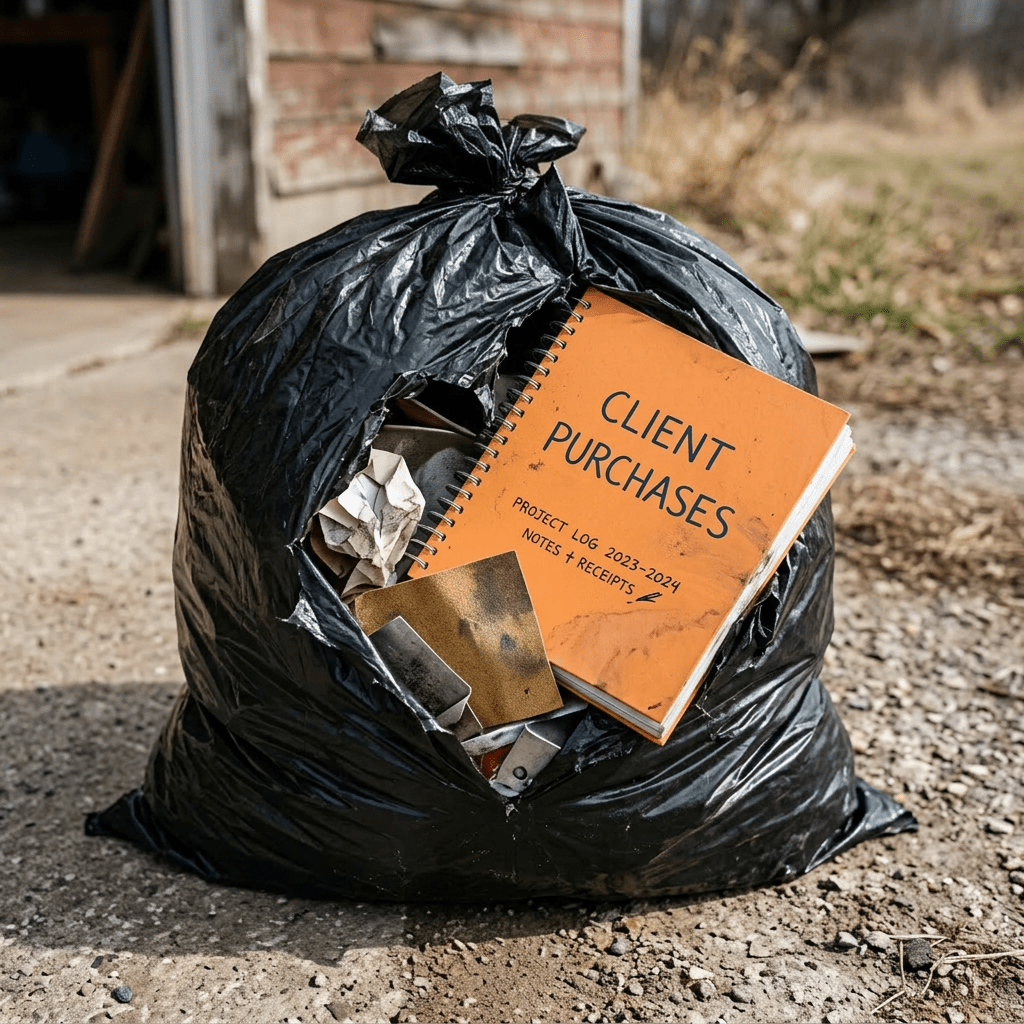
I didn’t expect my week to end with a trash bag of Mary Kay and Pure Romance materials sitting abandoned like a sad little time capsule. But there it was — tossed aside, half‑open, and full of something someone probably shouldn’t have thrown away so casually.

Inside the bag was a client list. Names, addresses, phone numbers. Purchase histories. Enough personal information to make any data‑privacy professional wince. And I’ve been focused on GDPR and privacy work lately, so maybe I’m more sensitive to this stuff than usual — but even without the experience, something about it felt wrong.

There’s a strange moment when you realize how easily someone’s personal details can slip out into the world. Not through a sophisticated hack. Not through a breach with a press release and a legal team. Just… through carelessness. A bag tossed out with the trash.

And it made me think about how many people hand over their information to MLM reps without a second thought. Because it feels personal — “my friend sells this,” or “someone from church or work does that.” But the truth is, most MLMs don’t train their sellers in data privacy. They don’t teach secure storage. They don’t talk about retention policies. They don’t explain what happens if a rep quits, moves, or throws their old inventory in a dumpster.

They just hand out order forms and say, “Write down your info.”

And people do.

The uncomfortable truth about MLMs and data privacy

MLMs rely on personal networks, which means they rely on personal data. But unlike actual businesses, they rarely have:

  • Data‑retention policies
  • Secure storage requirements
  • Training on handling sensitive information
  • Clear rules about disposal

Most reps are just regular people trying to make a little extra money. They’re not thinking about privacy laws. They’re thinking about sales goals.

And that’s how a bag full of strangers and community members personal information ends up abandoned in public.

GDPR has been on my mind

At work, we’ve been walking through GDPR exercises — mapping data flows, identifying risks, tightening processes. It’s tedious in the way that important things often are. But it’s also made me more aware of how fragile personal information really is.

GDPR assumes that organizations should treat personal data like something valuable. Something worth protecting. Something that belongs to the person, not the business.

MLMs… don’t operate that way.

A simple takeaway for anyone who buys from MLMs

If you’re giving your personal information to someone selling products out of their living room, you’re trusting them to protect it. And most of them don’t even realize they’re supposed to.

It’s not malicious. It’s just… untrained.

But untrained people can still mishandle data. And mishandled data can still hurt people.

Why this matters enough to write about

We live in a world where privacy is shrinking. Not dramatically, not all at once — but in small, quiet ways. A bag tossed out. A spreadsheet emailed. A form saved on a phone that gets traded in.

And maybe part of protecting ourselves is simply paying attention to where our information goes — even in the everyday, even in the small interactions that don’t feel like “real business.”

If nothing else, that abandoned bag reminded me of something simple:

Most data breaches aren’t high‑tech. They’re human.

And humans need better habits.


By the way, Meghan, if you ever come across this, I did your friends and family a favor and shredded their information.

Anchorhold

Back around 2000-2001 when I was in college, I had gotten to know an Irish nun, Sister Clare Julian, who later became Sister Julianna Johanna. She had a pretty simple website, but the person who set it up for her was no longer able to maintain it. As a person who was involved in both the church and technology, I offered to help her with it. I managed to maintain it through many years and different hosts. I think the first one was Angelfire – that brings back some wild memories of all the amateur days of html.

I had always considered her website a sort of sacred space. Peaceful and personal, it was full of stories and memories that evoked feelings. It was simple and majestic.

The last time we spoke was in 2017. I lost touch of her after that. Sometime after January of 2020 the last webhost took the site down. I haven’t been able to reach her or find her since. All of her email accounts are closed. I decided to re-host her website as sort of a tribute to her legacy.

The Anchorhold Website (best viewed in Internet Explorer (embedded midi music), many external links are broken)